
PA9T nozzle clogging: How to distinguish between material blockage and enlarged gates?
问题排查16 min read
On this page
A PA9T connector mold ran smoothly for the first 2,000 shots, then began experiencing intermittent nozzle clogging. Upon disassembly, the nozzle tip contained dark brown residue instead of clean solidified material.
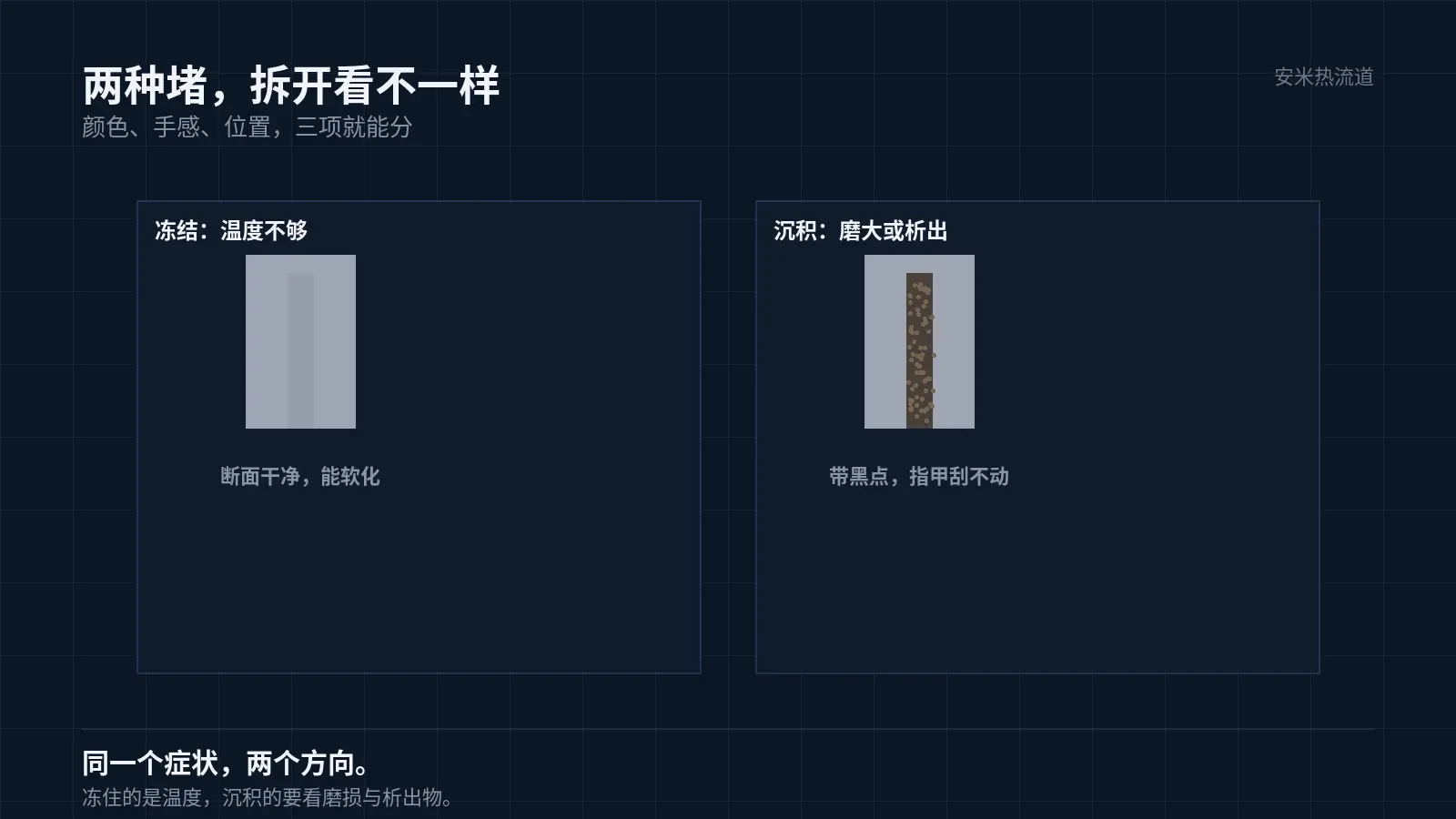
These two clogging types require different treatments: one stems from insufficient temperature causing material to freeze inside; the other results from gate wear or deposit buildup within the channel.
Disassembled residues reveal the cause
Frozen material matches the resin color, features a clean fracture surface, softens when soaked in hot water, and can be scraped with a fingernail.
Location matters. Freezing at the nozzle tip exit indicates a temperature issue; freezing deeper in the flow channel typically results from extended downtime and insufficient reheating of the entire section. Different locations entail significantly different remediation time costs.
Deposited material appears darker, often with black spots or brown patches. It is hard, cannot be scraped off with a fingernail, and may have a powdery surface layer.
This diagnosis takes only minutes but determines whether to adjust temperatures or replace components. An incorrect diagnosis leads to ineffective cleaning attempts.
Cleaning tools are critical. Using rigid objects to probe the flow channel can scratch the inner wall of the nozzle tip, leading to material buildup and more frequent clogs. Use dedicated cleaning tools; do not use screwdrivers.
After cleaning, measure the gate diameter and record it on the mold card. This data helps distinguish between wear and temperature issues during subsequent clogging events.
Volume also matters. A thin layer suggests insufficient exit temperature; a solid mass deep in the channel indicates freezing during downtime. Different volumes require different corrective actions.
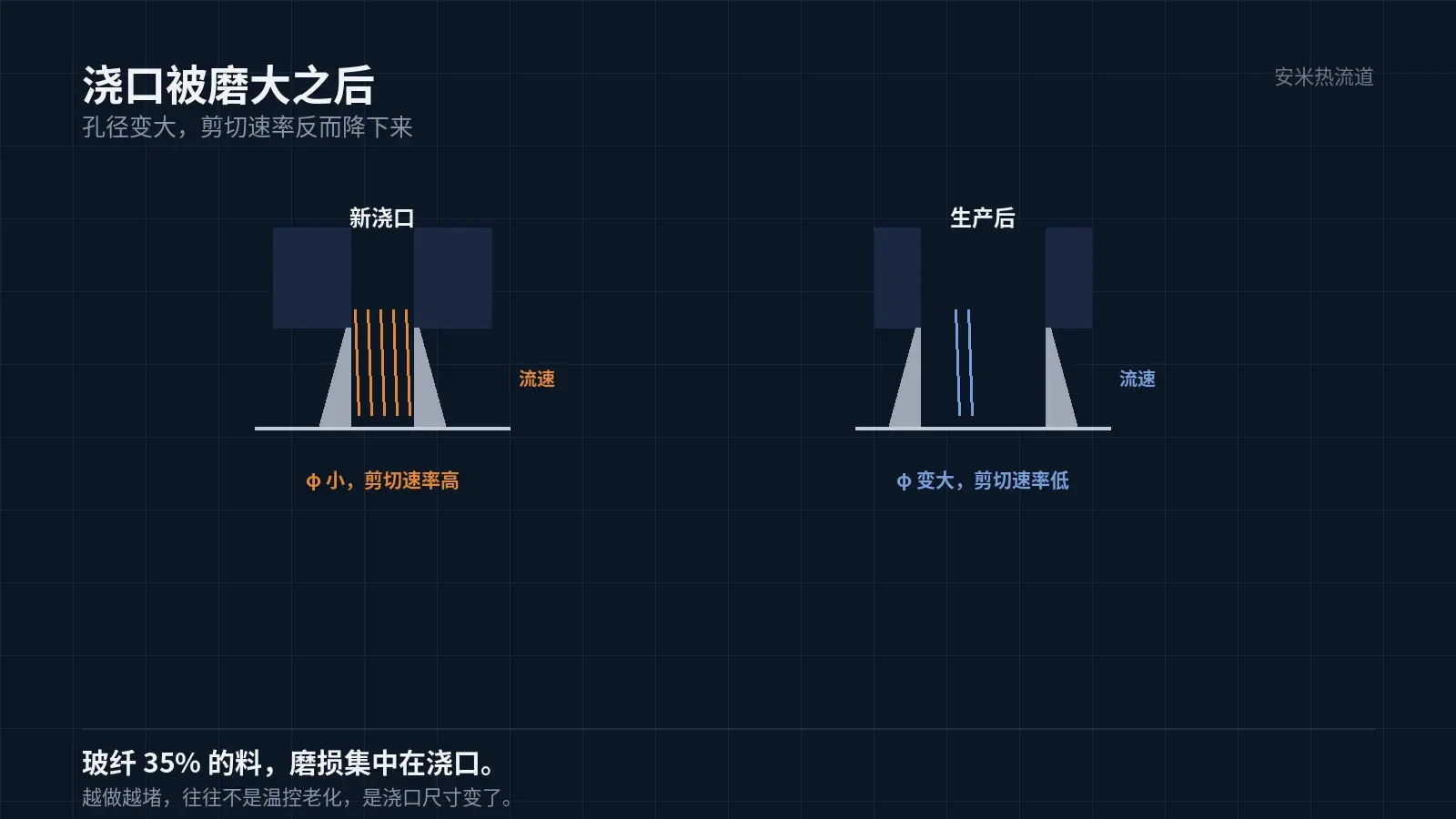
Wear caused by 35% glass fiber
PA9T G1350A contains 35% glass fiber. Glass fibers cause the highest flow velocity at small cross-sections like gates, concentrating wear there. After several thousand shots, the gate diameter increases.
Track gate bushing material and replacement cycles. Glass fiber wear occurs gradually; without records, issues are only detected after failure. Log shot count, measured gate diameter, and replacement date on a single card.
As the gate expands, shear rate drops, reducing shear heating and lowering the actual exit temperature. This leads to progressive clogging: initial runs proceed smoothly, but failures occur later despite using identical parameters.
This is often misdiagnosed as temperature control degradation. To distinguish: measure the gate diameter against drawings and check heater band resistance for normal values.
Preventive Step: Do not directly copy previous material settings when switching materials. The PA9T nozzle temperature range is 300–350°C, while the PA46 range is 305–320°C.
Unlike LCP nozzles, which clog abruptly due to sharp viscosity spikes, PA9T shows gradual clogging caused by combined wear and slow temperature drift, making early symptoms hard to detect.
Persistent reheating after shutdown
Direct startup after mold changes, power outages, or weekend shutdowns often leads to failed initial shots. This also happens with PA9T because the nozzle tip has low heat capacity and needs time to reheat.
The difference is that PA9T has a melting point of 300°C and a nozzle range of 300–350°C, resulting in a higher reheating start temperature compared to PA46 and longer wait times.
Reheating sufficiency criterion: If the first dry shot shows a thin or intermittent flow, the target temperature has not been reached. Proceed to production only when the flow is straight and full. This visual check is more reliable than timing.
Standardized assessment method: Perform one dry shot at startup to verify flow straightness, then another to confirm gate fill quality. Evaluate based on material flow, not elapsed time.
Shutdown records are essential. Reheating requirements vary between a two-day weekend stop and a two-hour shift change. Without recorded shutdown durations, reheating becomes guesswork.
Procedure sequence
First, clean: clear the nozzle tip channel and gate outlet, then perform several dry shots to check flow.
Second, reheat: wait for the actual temperature to reach the setpoint before starting production.
Re-check the gate: measure its diameter and inspect for wear or deposits; replace the gate insert if needed.
Adjust settings last. Reversing this order means redoing work on already resolved issues.
Verify after treatment; do not assume the issue is resolved after a single attempt. Run a full shift, sampling one part per hour to inspect the gate. Re-check at startup the following day. The nozzle clogging issue is considered resolved only if both checks are normal.
Log the recurrence cycle. Clogging after 3,000 shots versus after three days indicates different root causes: the former suggests wear, while the latter points to temperature or deposition issues.
Two Boundaries
Cleaning alone does not guarantee a permanent fix. Without adjusting settings and replacing worn parts, recurrence is inevitable. The key metric isn't whether the issue can be resolved temporarily, but how often it returns.
Second, do not confuse venting issues with nozzle clogging. Trapped air can also cause short shots; however, the nozzle tip stays clean while the part exhibits burn marks or air traces. Inspecting the part is faster than checking the nozzle tip.
For PA9T nozzle clogging, first determine if the blockage is due to material or deposits, then measure the gate. Completing these two steps largely determines the next course of action.
Please provide the material grade, production shot count, and gate drawings. We will evaluate gate wear and exit temperature, then issue a quote once the solution is confirmed.
When measuring the gate, include the inner bore and exit chamfer. Measuring only the bore diameter does not reveal wear patterns.
MATCHED BY MATERIAL AND DEFECT
This article covers stringing, drooling, clogging, and high-heat resins; refer to SD for gate freeze and break-off.
Register for a selection review and quote
Submit part, mold, and material details. Our engineers will evaluate the gate solution per part and provide a quote.
Upload a 2D layout drawing using the form.
Online selection and quote
Scan to register