Stringing
At mold opening the gate is still molten, drawing a fine thread from the part to the gate that lands on the part or in the cavity.
Timing: The cooling step did not drop far enough; break-off happens while the melt is still connected.

TECHNOLOGY PRINCIPLES
The whole runner does not heat and cool. Temperature changes only at the tip and gate, following the molding cycle: heat during filling, hold during packing, cool down in the cooling step, and finish gate solidification before mold opening.
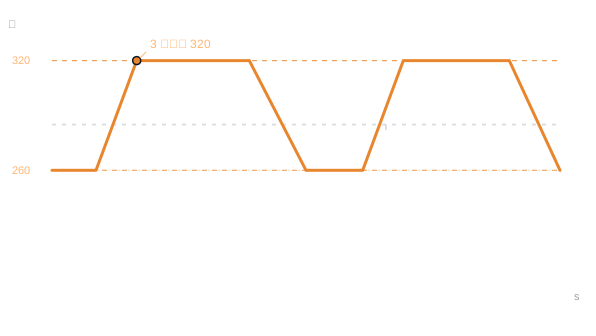
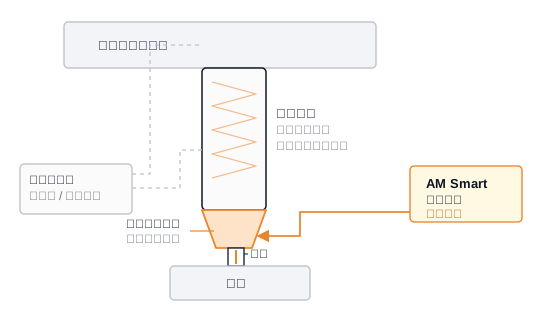
Heat is applied only at the contact interface between the tip and the mold gate; the middle of the runner is not heated.
The tip is heated and sensed independently, so heat stays close to the gate. The manifold and nozzle body remain on the constant-temperature controller, avoiding repeated heating and cooling of the whole runner.
The thermal inertia of the whole runner is therefore not part of the response. Heating and cooling happen only in the small tip section, which is why it can keep up with an 18-second cycle.
Temperature setpoints switch across filling, packing and cooling, and gate solidification finishes before mold opening. The example below uses an LCP precision connector with an 18-second cycle.
FILL
Raise to setpoint
320℃
Bring the tip to setpoint before melt enters, so low-viscosity material can fill the part.
PACK
Hold setpoint
320℃
Keep the temperature through packing so local cooling does not stop the flow.
COOL
Drop below freeze
260℃
The gate solidifies before the cavity; the break-off point stays at the tip, not on the part.
OPEN
Set and break
Instant
No cycle-time penalty. The gate is already solid at mold opening, so stringing and drooling have no chance to form.
All three occur where the tip meets the gate. The same LCP precision connector reference applies: stringing and drooling come from excessive temperature, clogging from insufficient temperature. Once the temperature sequence is right, they are not suppressed by machine tuning; the conditions for them never form.
At mold opening the gate is still molten, drawing a fine thread from the part to the gate that lands on the part or in the cavity.
Timing: The cooling step did not drop far enough; break-off happens while the melt is still connected.
Gate temperature is too high; melt out-of-control at gate after mold opening results in continuous dripping and flash that builds into a slug.
Timing: Solidification is not complete before mold opening, so the gate never forms a seal.
Gate temperature is too low, so melt freezes early in the tip channel; the next shot sees a smaller or fully blocked passage.
Timing: The filling step does not heat fast enough, and thin-wall parts are especially exposed.
A constant-temperature runner heats the gate through the nozzle body and holds a nearly fixed temperature, making filling and clean break hard to satisfy at once. FHFC heats and senses the gate independently and switches with the cycle.
| Metric | Constant temperature | FHFC |
|---|---|---|
| From cold start to production | 24 min | 18 min (the gate reaches temperature in the first 3 min) |
| Gate temperature | 285℃ (about 35℃ below setpoint) | 320℃ (at setpoint) |
| Temperature swing per shot | ±20℃ (268–307) | Switches between 320℃ and 260℃ with the cycle; the gate breaks cleanly at mold open |
The 24 min, 285℃ and ±20℃ figures come from on-site measurements on an LCP precision connector project running an 18 s cycle; values vary with material, cavitation and mold structure.
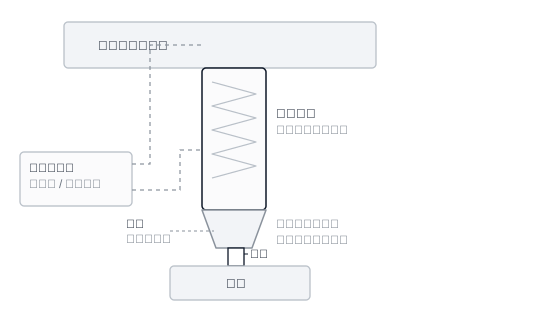
The problem with constant temperature is not controller accuracy. The gate section has no independent heat source; its temperature is transferred, not controlled.
Heat transfer decays, so the gate runs about 35℃ below setpoint. The whole runner is heated together, and each shot still swings by ±20℃.
A fixed temperature means you can only choose one point: the high temperature needed for filling or the low temperature needed for break-off. FHFC separates the two with an additional AM Smart controller dedicated to the gate.
Resin temperature, mold temperature and hot runner temperature are calculated separately. Gate temperature is set by heater power, gate-section heat capacity and cooling time; it cannot be replaced by resin temperature.
Gate temperature
320℃
The cooling step drops to 260℃. Set two points for the material: high temperature for filling and packing, below the freeze point before mold opening.
Heating power
300W / circuit
An independent tip channel reaches temperature in 3 minutes. It does not heat the entire manifold, so heat-up does not hold up the cycle.
Cycle timing
18s(example)
All three values are examples from an LCP precision connector running an 18 s cycle; recalculate when the material or layout changes.
Choose a series by gating method and gate mark, then return here to check temperature timing and parameters.
Flame-retardant and corrosion-resistant resins; transparent and optical components; runner-gate molds
View specificationsPrecision plastic parts, standard precision molding, direct-gate molding
View specificationsHigh-precision connectors, cosmetic components, mirror-finish molding, gate-mark-free parts
View specificationsPVC and other easily degradable resins, corrosive materials, and specialized engineering plastics
View specificationsStringing, drooling, and clogging may appear to be machine-setting issues, but a constant-temperature gate remains molten throughout the entire cycle. This article explains how each defect forms, how FHFC freezes the gate before opening, and why lowering the temperature or shortening the packing time only addresses symptoms.
The return on investment from FHFC appears in yield, downtime, labor, and consumables—not gate appearance. The article first quantifies the hidden cost of maintaining constant temperature, then walks through a precision connector case study, explores technology limits, and addresses common misconceptions about purchase price.
FHFC hot runners are not suitable for every molding project. This technology controls local gate temperature to address stringing, drooling, and clogging. It is not a whole-mold FHFC solution and does not resolve weld lines, surface appearance, or warpage. Material selection, part design, existing defects, and production volume provide the initial basis for assessment.
LCP is difficult to mold not because of machine setup challenges, but because the gate operates between high temperatures and thermal degradation. High processing temperatures, low melt viscosity, thermal sensitivity, and tight precision connector requirements combine to cause stringing, drooling, and clogging. This article explains the four root causes and how dynamic gate temperature control optimizes timing.
NEXT STEP
Share the part, mold and material details. Our engineers assess the gate by part, then provide the proposal and quotation.